Free, no obligation 0333 443 2893

Compensation

What you can claim for

A cycling accident claim is not one thing. It is a set of losses, and a claim done properly recovers all of them rather than the most obvious one. Here are the eight we deal with, and what evidence helps for each.

01

Personal Injury

The injury itself sits at the centre of almost every cycling claim, and it covers more than broken bones.

A personal injury award compensates you for the harm the accident did to you, both physical and psychological. It is assessed on the severity of the injury, how long recovery takes, and the degree to which it changes what you are able to do.

Physical injuries in cycling accidents range from road rash, fractured collarbones and wrist injuries through to serious head, spinal and pelvic trauma. Psychological harm is treated just as seriously: loss of confidence on the road, anxiety about traffic, disturbed sleep and post-traumatic stress are all recognised and compensated.

Medical evidence does the heavy lifting here. The solicitor will arrange an independent medical examination at no cost to you, and the resulting report sets out your injuries, your prognosis and any long-term effects. That report is what your award is built on, which is why it is never rushed.

02

Medical Expenses

Treatment you have paid for, and treatment you still need, are both recoverable.

NHS treatment is free at the point of use, but a cycling injury rarely stops there. Prescription charges, over-the-counter painkillers, dressings, crutches, braces and splints all add up, and every one of them is recoverable.

Private treatment is recoverable too where it is reasonable. That commonly means physiotherapy, sports therapy, osteopathy, dental work after facial injuries, or private scans and consultations that get you diagnosed and treated faster than a waiting list allows.

Keep your receipts. The solicitor can still recover costs without them by reconstructing what you spent, but documented expenses are paid without argument, and that is the difference between a settlement that takes weeks and one that takes months.

03

Loss of Earnings

If the accident stopped you earning, that shortfall is part of your claim.

The solicitor will recover the difference between what you would have earned and what you actually received. For employees that usually means the gap left by statutory sick pay or a period of unpaid leave, evidenced by payslips and your employer.

Self-employed and freelance cyclists are covered on the same principle, though the evidence looks different: accounts, invoices, tax returns and cancelled work. If you turned down contracts or lost clients while you were off the bike, that belongs in the claim.

Lost overtime, missed bonuses, forfeited commission and used-up holiday entitlement all count. So does the cost of returning to work on reduced hours, which is common after a serious injury and frequently overlooked.

04

Bicycle Repairs or Replacement

Your bike, and everything you were wearing and carrying, is recoverable property damage.

A written-off bike is replaced, and a repairable one is repaired. Where a frame has taken an impact the solicitor will push for replacement rather than repair, because a carbon frame that has been hit is not a frame you should be riding, whatever it looks like from the outside.

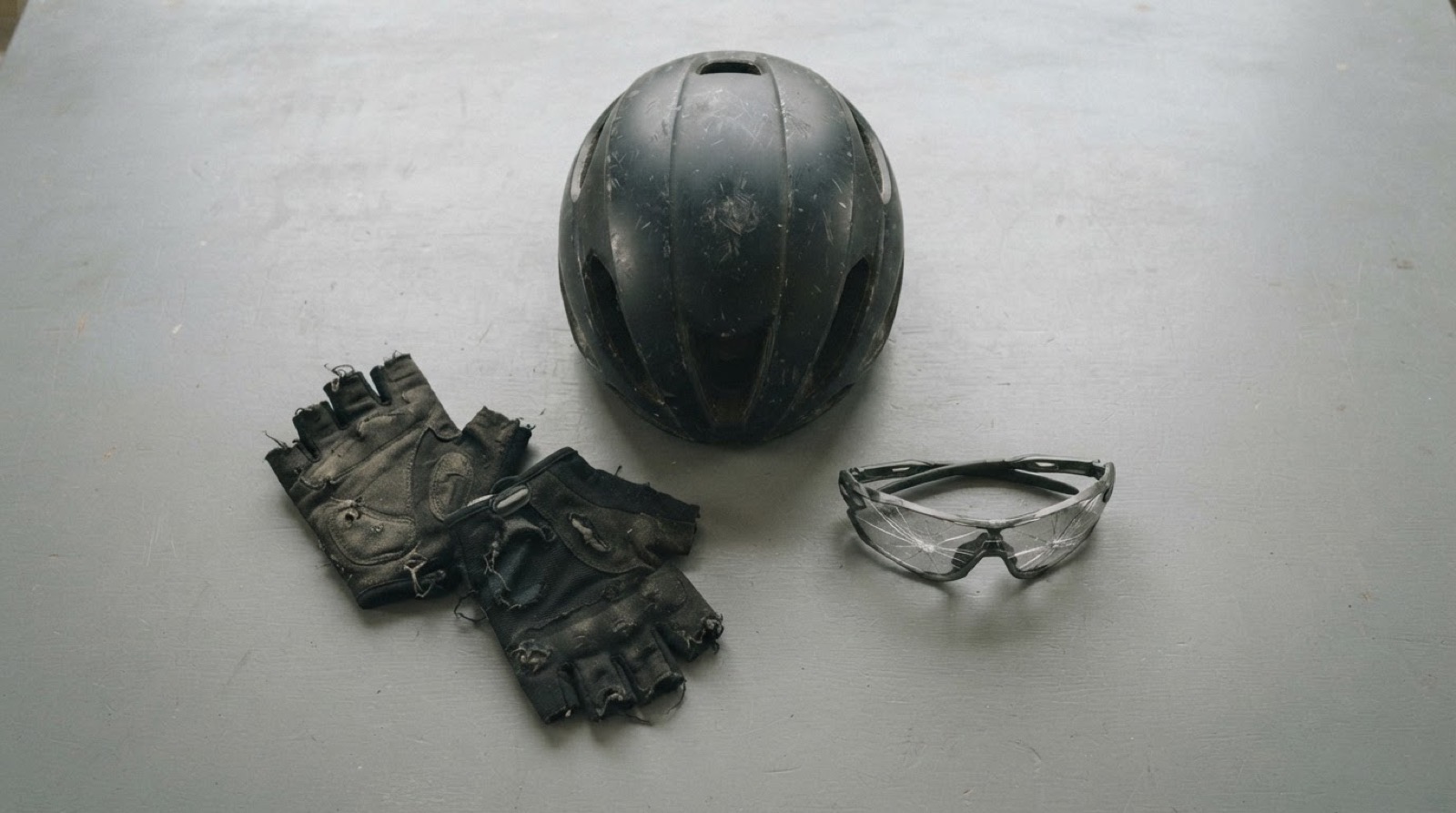
Kit is claimable and it is where cyclists routinely undersell themselves. Helmet, shoes, pedals, wheels, groupset, computer, lights, power meter, glasses, jersey, bib shorts, gloves, jacket, phone and watch. A helmet that has been in an impact must be replaced even if it appears undamaged, and that is a recoverable cost.

The solicitor will aim to get you riding again quickly rather than making you wait for the claim to conclude. Interim payments for the bike and essential kit can often be secured early, well before the injury side of the case is settled.

A scuffed cycling helmet, torn gloves and cracked glasses laid out on a table
Keep everything exactly as it is. Damaged kit is both evidence and a recoverable loss.
05

Care and Assistance

Help you needed at home counts, including help given free by family.

When an injury leaves you unable to manage day to day, the value of the care you needed forms part of the claim. That covers professional carers, but far more often it covers a partner, parent or friend who stepped in.

Care given free by family is still recoverable. The law values that assistance at a commercial rate and awards it as gratuitous care, so the person who looked after you is not penalised for doing it out of love rather than for a fee.

Practical help counts as much as personal care: washing and dressing, cooking, cleaning, shopping, driving you to appointments, childcare, and jobs you would normally do yourself such as gardening, DIY and looking after pets. A simple diary of who helped and for how long is the most valuable evidence you can keep.

06

Travel Expenses

Getting to treatment, and getting around while you cannot ride, both cost money you can recover.

Every journey connected to your injury is recoverable: hospital appointments, GP visits, physiotherapy, scans, and trips to see us. Mileage is claimed at a set rate per mile, and parking, public transport fares and taxis are recovered on receipts.

If the accident took away the bike you commuted on, the extra cost of getting to work by other means is recoverable for as long as you are without it. For a daily bike commuter that figure can be substantial over a few months.

Where an injury stops you driving, the cost of alternative transport is claimable. So is the cost of visits your family made to you in hospital, which many people do not realise forms part of the claim.

A cyclist riding through a British city at dusk with lights on, traffic blurred behind
If the accident took away the bike you commuted on, the extra cost of getting to work by other means is recoverable for as long as you are without it.
07

Future Losses

Where an injury will still be affecting you years from now, the claim has to look forward as well as back.

Serious injuries do not always resolve. Where medical evidence shows a lasting effect, the claim includes the losses you have not yet incurred, calculated over the years they are expected to continue.

That can mean ongoing treatment and medication, future surgery, aids and equipment, adaptations to your home or car, and continuing care. Where a job has become impossible or your earning capacity is reduced, the claim covers that shortfall over your working life, and any effect on your pension.

This is the part of a claim most often settled too cheaply, because it depends on getting the medical prognosis right before agreeing a figure. The solicitor will not settle a case with a long-term element until the evidence is clear on where you are going to end up.

08

Pain and Suffering

The experience of being injured, and what it took away from you, is compensated in its own right.

Alongside the injury itself, the law compensates what lawyers call pain, suffering and loss of amenity. In plain terms: what the injury felt like, and what it stopped you doing.

Loss of amenity is the part cyclists feel most keenly. A missed season, an event you had trained a year for, a sportive you had to withdraw from, a holiday cancelled, the loss of the daily ride that kept you well. Those are real losses and they are recognised.

Distress, loss of confidence and reluctance to ride again are compensated too. Many riders who have been hit by a vehicle find getting back on the road genuinely hard, and that is treated as part of the harm done rather than something to be brushed aside.

Free, no obligation

Start your claim today

One phone call is usually enough to tell you where you stand. No Win, No Fee if you go ahead, and no cost at all if you do not.