Filtering and your claim: what the law actually says
Filtering is legal in the UK, and being knocked off while doing it does not sink your claim. What it can do is start an argument about shared responsibility, and that argument is winnable.
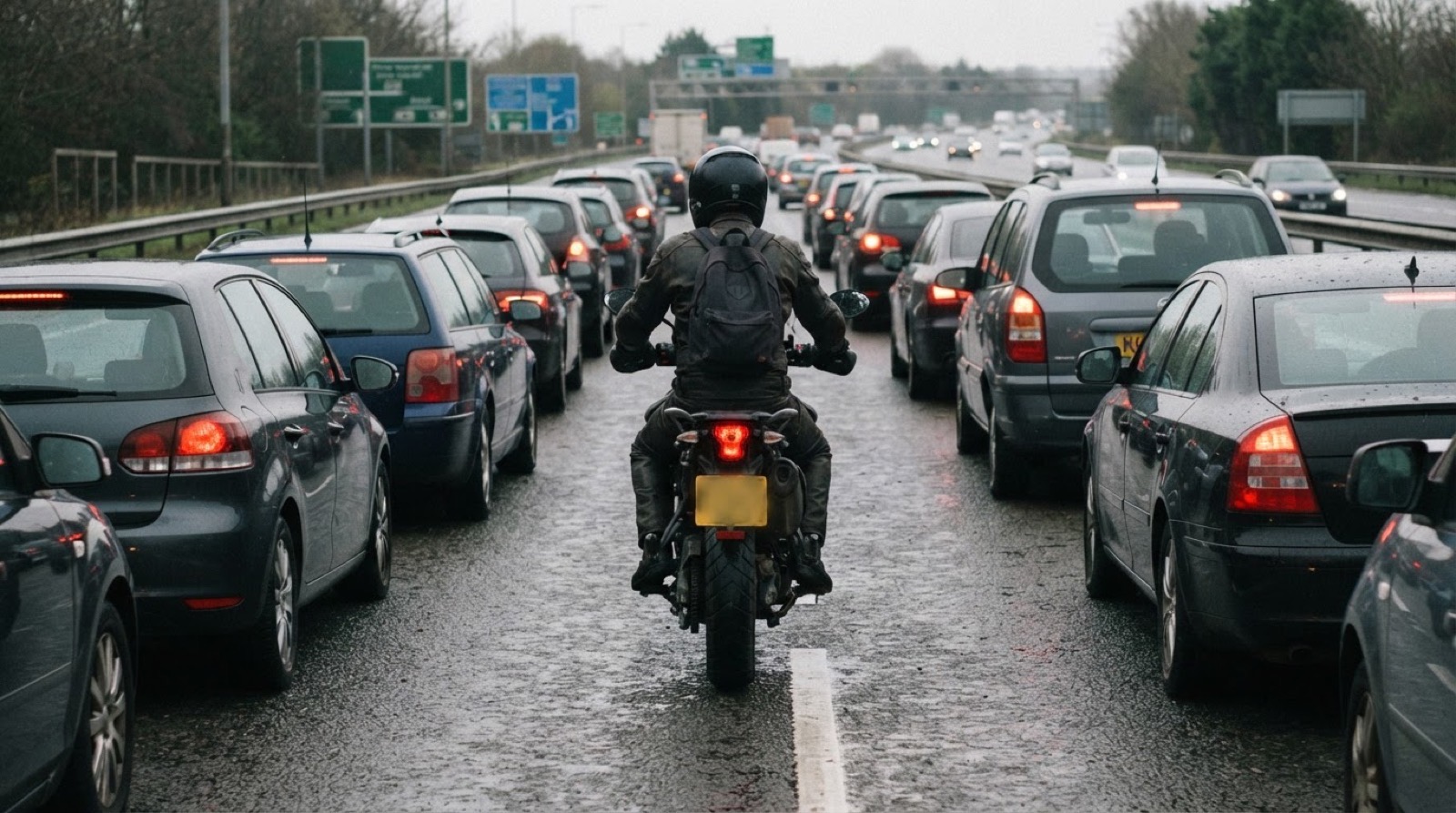
Riders ask us about this more than almost anything else on the motorcycle side. They have been hit while filtering, and somebody at the scene has told them with great confidence that filtering is illegal and they have no claim.
Both halves of that are wrong.
Filtering is legal
There is no law prohibiting filtering in the UK. The Highway Code recognises it, and advises drivers to look out for motorcyclists filtering through traffic. Riders are expected to do it with care, but the act itself is lawful.
So being knocked off while filtering does not remove your right to claim. If a driver changed lane into you, opened a door into you, or turned across you without looking, that is their negligence whether you were filtering or not.
Where the argument starts
What filtering does invite is a contributory negligence argument. The defence will say you contributed to your own injuries, and if it succeeds your award is reduced by a percentage rather than refused.
The factors that tend to matter:
- Your speed relative to the traffic. Filtering slowly past stationary or near stationary traffic
is treated very differently from passing moving traffic at a significant speed differential.
- Where you were in the road. Filtering along the outside of a queue is generally viewed more
favourably than threading between two moving lanes.
- Junctions and gaps. Passing a gap left for a side road or a right turning vehicle is where the
defence has most to work with, because a rider should anticipate something emerging.
- Visibility. Whether your lights were on, and whether you could reasonably have been seen.
What the driver still has to do
None of the above removes the other party's duties. A driver changing lane must check their mirrors and blind spot. A driver turning right across a queue must be satisfied the road is clear, and cannot simply rely on a gap being waved at them by another motorist. A passenger opening a door into the road must look first.
We see a lot of cases where the defence leans hard on filtering to distract from a straightforward failure by the driver. Naming that early usually settles it.
Evidence that decides these cases
Camera footage is worth more here than in almost any other type of claim, because the whole dispute is about relative speed and position. If you run a camera, get the file off the device the same day.
Beyond that:
- The point of impact on both vehicles, which tells an expert a lot about angles
- Whether the traffic was moving or stationary, and how you can show it
- The road layout, particularly any junction or gap near the impact point
- Witnesses, including drivers in the queue you were passing
The honest summary
Filtering claims are usually worth pursuing and frequently settle with no reduction at all. Where a reduction is applied it is often modest. What sinks these cases is not the filtering, it is a rider who describes what happened inaccurately at the outset and loses credibility later.
Tell us exactly what you were doing, including your best honest estimate of your speed. We will tell you what we think the argument looks like, free and with no obligation.