Sorry mate, I didn't see you" is not a defence
The junction collision is the most common serious motorcycle accident in the UK, and the driver's excuse for causing it is almost always the same. Here is why it does not protect them.
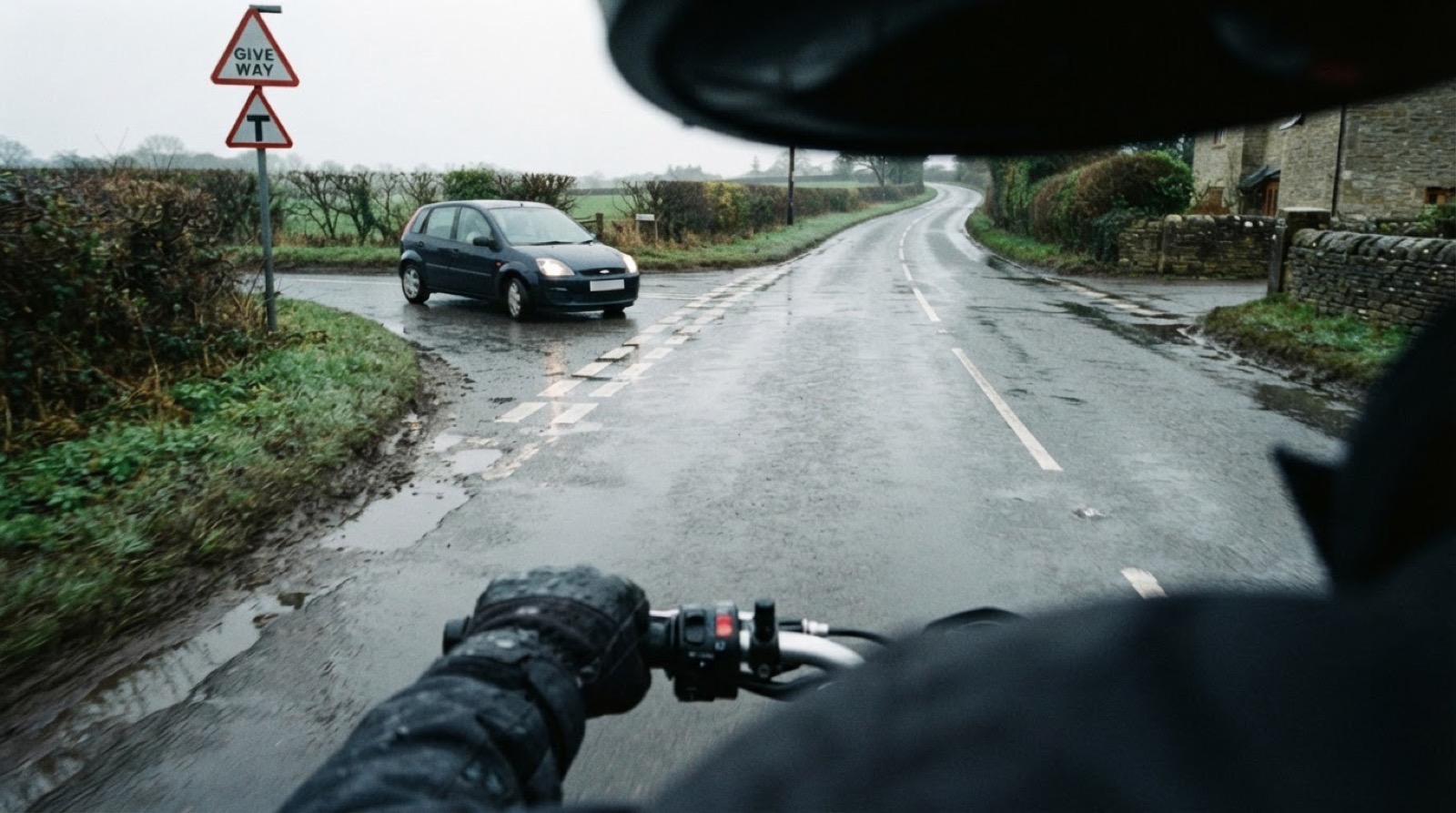
Every experienced motorcyclist knows the phrase. You are on a road you have ridden a hundred times, a car edges out of a side road, and the next thing anyone says to you is that they did not see you.
It is said so often that riders have shortened it to four letters. It is also, in law, close to worthless as a defence.
The duty sits with the driver emerging
A driver waiting at a junction has a positive duty to look properly before pulling out, and to keep looking until they are clear. That is not a courtesy. It is the standard the law holds them to, and the Highway Code is explicit that they must not proceed until it is safe to do so.
If a motorcycle was there to be seen, and the driver pulled out into its path, the failure is theirs. Saying they did not see you is an admission that they did not look properly, not an excuse for the consequences.
Why it happens so often
Understanding the mechanism helps, because insurers sometimes try to reframe it as the rider's problem.
A motorcycle presents a narrow profile. Approaching head on it does not grow in a driver's field of view the way a car does, so it is easy to misjudge how fast it is closing. Drivers also scan for what they expect to find, and a great many of them are scanning for cars.
None of that transfers responsibility. A driver who cannot judge an approaching vehicle's speed should wait. The law does not offer a discount for a difficult judgement they chose to make anyway.
What an insurer may argue instead
Where liability on the junction itself is hard to dispute, the defence usually moves to your speed or your position. Expect one of these:
- That you were travelling above the limit, or too fast for the conditions
- That you were too close to the centre line, or riding in the driver's blind spot
- That you had time to brake or swerve and failed to react
Each of those is an evidence question, and evidence beats assertion. The damage pattern on both vehicles, the final resting positions, skid or scuff marks, and the geometry of the junction all say a great deal about who was where and how fast. Where it matters, we instruct an accident reconstruction expert.
What helps your claim most
If you are able to, at the scene or shortly after:
- Get the police incident reference number
- Photograph the junction from the driver's seated position, showing what their view actually was
- Photograph both vehicles before they are moved, from several angles
- Note the weather, the light and whether your headlight was on
- Get any witness details, including other drivers who stopped
- Download your camera footage the same day, before the device overwrites it
That third point is the one riders skip and lawyers value. A photograph taken from where the driver was sitting, showing a clear line of sight down the road you were on, is very hard for anyone to argue with later.
If you were partly at fault
You can still claim. Shared responsibility reduces an award by a proportion rather than defeating it, so even where you accept you were carrying some speed, the claim is usually still worth pursuing.
Be straight with us about it from the outset. We would far rather build the case knowing the weak point than have a defendant produce it when we are already committed.
If a driver pulled out on you, call us. The first conversation is free, there is no obligation, and we will tell you honestly where we think you stand.