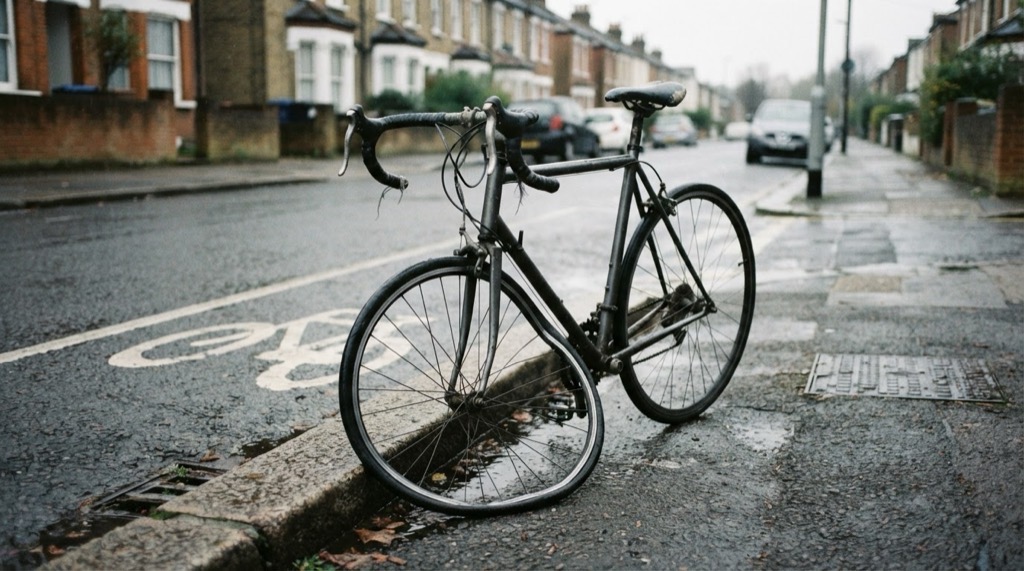
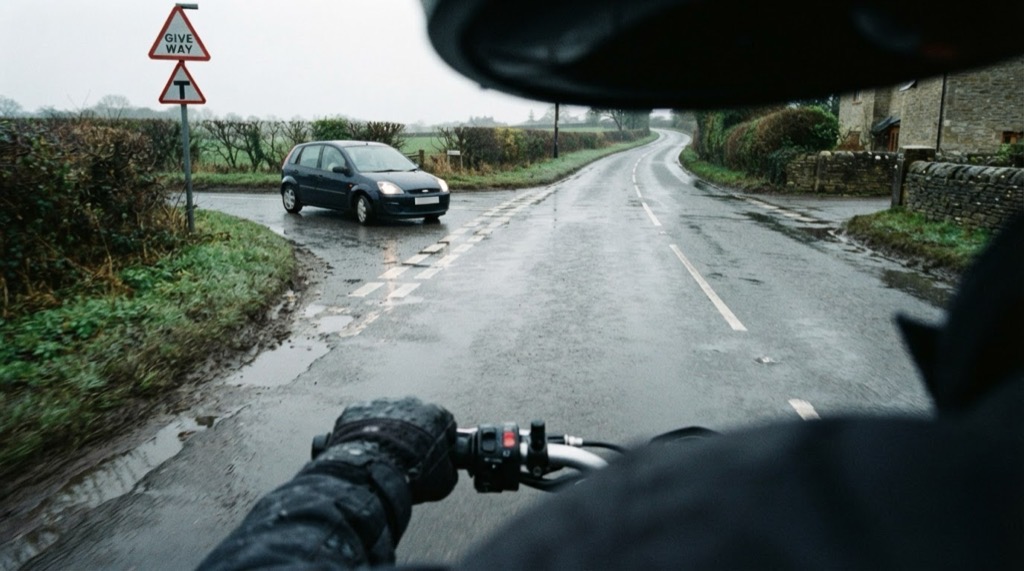
Winter riding: what changes about your claim
Cold, wet and dark conditions do not lower the standard drivers are held to. They do change the evidence, the arguments an insurer will reach for, and how quickly you need to act.

Riders who keep going through winter are the ones most likely to be told the accident was their own fault for being out there. It is worth knowing in advance why that argument is weaker than it sounds, and what actually changes when the weather turns.
The standard on drivers does not drop
A driver must drive according to the conditions. Rain, ice, spray, low sun and early darkness all increase what is required of them, not decrease it. Stopping distances lengthen and the Highway Code expects drivers to leave more room accordingly.
So a driver who runs into you on a wet road because they were two seconds behind has not been unlucky. They were driving to a gap that was adequate in July and inadequate in January, and that is negligence.
Nor is there any rule that a cyclist or motorcyclist should not be on the road in winter. You have the same right to use it in December as in June.
What insurers will actually argue
Expect these, and be ready for them:
- Visibility. Whether you had working lights, and whether you were wearing anything reflective.
- Speed for the conditions. Yours as well as theirs.
- Whether you should have anticipated ice. Particularly on a known frosty morning or a shaded bend.
- Tyre condition. Especially on the motorcycle side.
Two of those you can settle before you ever have an accident, simply by running good lights and keeping your tyres right. If you were running lights, say so early and tell us if you have any way of proving it, such as a purchase record or a charging app.
Ice, and who is responsible for it
Where a fall is caused by ice rather than by a driver, the position is similar to a pothole claim. A highway authority has a duty to take reasonable steps to ensure that safe passage is not endangered by snow or ice, and gritting records become the centre of the case.
That means the questions are:
- Was that road on the authority's gritting route, and at what priority
- What did the forecast tell them, and when
- Did they grit as their own policy required
- Was the location a known problem spot with previous reports
As with potholes, evidence disappears fast. Photograph the surface, note the exact spot and the time, and tell us quickly so we can request the records while they still exist.
Diesel, mud and standing water
Winter brings hazards that are somebody's responsibility rather than nobody's:
- Diesel spills on roundabouts and bends, which may be traceable to a specific vehicle or operator
- Mud on the road from farm or construction traffic, where the operator can be liable for failing
to clear it
- Standing water from a blocked drain the authority knew about
These are worth investigating rather than writing off as bad luck. A mud or diesel claim against an identifiable operator can be considerably more straightforward than a claim against a council.
Act faster in winter
The practical point. Ice melts, mud gets washed away, spills get treated and gritting records get archived. A summer collision leaves evidence that waits for you. A winter one often does not.
If you have come off in bad conditions, ring us sooner rather than later. It costs nothing to ask, and in winter cases the difference between calling in week one and week six is frequently the difference between a claim and no claim.